AI Model Release Strategy: Open Source vs Closed Source - Which One Is Actually Useful?
Table of contents
AI technology is advancing at an increasingly rapid pace, and with each new model release, developers and companies must consider whether it's open-source or closed-source. In short, the choice depends on specific technical requirements and goals. Open source offers advantages in customization and transparency, while closed-source models excel in stability and quality assurance. Both approaches have their pros and cons, and the key factor lies in understanding your specific use case and objectives.
Subheading: Transparency, Control, Development Efficiency, Deployment Ease
- Transparency and Verifiability: Open-source models provide full transparency, including their training data, architecture design, and parameter values. This allows developers to analyze how the model makes decisions and directly identify biases or errors for correction. Closed-source models, on the other hand, keep their core structure hidden and face limitations such as "difficulty in verification."
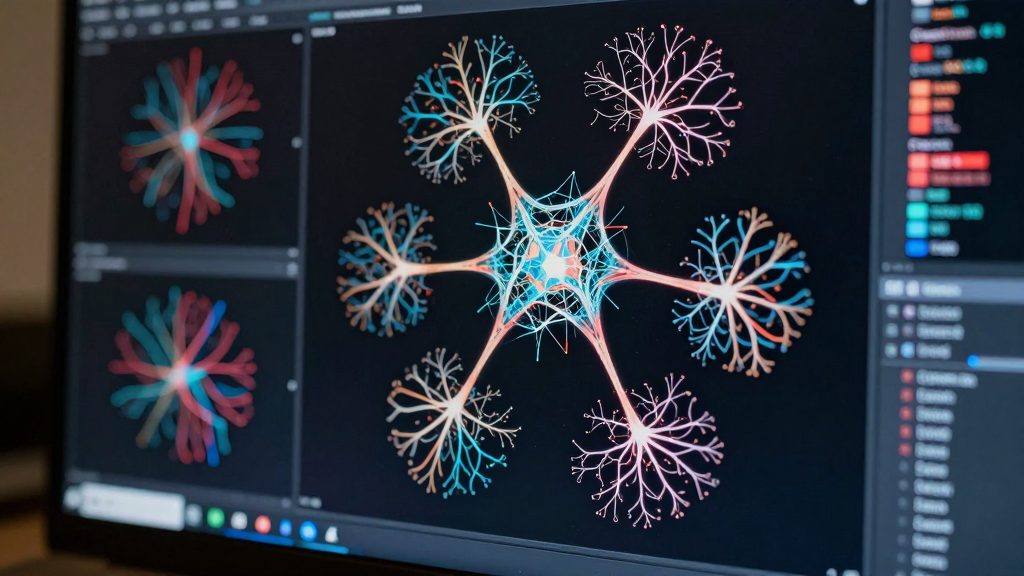
- Control and Usage Restrictions: Open-source models generally come with more flexible usage conditions, allowing commercial use as well as research purposes. Some open-source models also include "non-commercial usage" restrictions. Closed-source models, on the other hand, enforce clear usage limits through API access limitations or licensing contracts. Violation of these terms can lead to legal consequences.
- Development Speed and Customization: Open-source models allow direct code modification or retraining with specific datasets, making them highly effective for solving specific industry problems. Closed-source models provide limited interfaces and restrict users to fixed functionalities only. However, this also allows for rapid implementation of desired features.
- Deployment and Maintenance Burden: Open-source models can be deployed on local servers or cloud environments, reducing dependency on external services. However, users must manage infrastructure and security updates themselves. Closed-source models are typically delivered as SaaS (Software-as-aService), where the provider handles server management and security. Users experience less complexity in deployment but rely more on external services.

| Comparison Item | Open Source Model | Closed Source Model | |------------------|-------------------|---------------------| | Code Accessibility | ✅ Fully open, modifiable | ❌ Restricted access | | Fine-tuning Capability | ✅ Can fine tune with specific data | ❌ Limited or not possible | | Security Risk Management | ✅ Managed by user | ❌ Dependent on provider | | Fast Development Support | ✅ High customization freedom | ✅ Easy integration via API | | Usage Conditions Clarity | ⚠️ Varies by license | ✅ Clearly defined conditions |
Recommended For
- Researchers and Development Teams: When you want to analyze model behavior or improve performance with specialized datasets, open-source models are ideal. They're especially recommended for projects requiring case-based improvements in NLP or computer vision.
- Enterprise IT Leaders: When stability and security are priorities, and minimizing the risk of external service disruptions or data leaks is crucial, closed-source models may be a reasonable choice despite their limited transparency. They're preferred in highly regulated sectors like finance and healthcare.
- Startups or Small Development Teams: When resources are limited, closed-source models can save time and cost by offering easy API integration. However, if long-term independent technological capabilities are desired, open-source models with fine-tuning potential offer distinct advantages.
- Educational Developers: When the goal is to understand model structure and experiment directly, open-source models provide high educational value. For presentations or simple chatbot implementations, closed-source models may be more effective due to easier integration.
Choosing AI models isn't about picking the "best" option, but rather what problem you're trying to solve. Open-source models are ideal when you want to customize and modify the model yourself, while closed-source models offer optimal solutions for situations where precise and stable results are required. Remember that technology is just a tool—the real key is understanding why you're using it.
Related posts

AI Model Release Checklist: 7 Things to Check Before You Release It

7 Key Checkpoints for AI-Based Automation Tools: 7 Elements You Must Verify Before Applying to Real Work

AI-powered code review tools: 6 usage guides
6 Key Things to Check Before Deploying AI Models
Popular posts
AI Model Release Checklist: 7 Things to Check Before You Release It
7 Key Checkpoints for AI-Based Automation Tools: 7 Elements You Must Verify Before Applying to Real Work
AI-powered code review tools: 6 usage guides
Comments 0