6 Key Things to Check Before Deploying AI Models
AI technology is rapidly evolving, and its impact spans across entire industries. When deploying AI models into real-world environments, numerous factors beyond technical performance come into play. Errors after deployment, service downtime, and loss of user trust can damage not only the technology itself but also brand credibility. Therefore, we’ve compiled essential elements to check before deploying AI models.
1. Verification of Model Accuracy and Stability
Model accuracy is a mandatory prerequisite before deployment. However, high accuracy scores don’t guarantee stable performance in real-world environments. It's essential to prepare test sets that closely resemble actual data and re-evaluate performance under real conditions. Special attention must be paid to scenarios where data distribution may change (e.g., new user groups or pattern shifts over time). Collecting responses to unexpected inputs is also crucial.
2. Realistic Assessment of Infrastructure Requirements
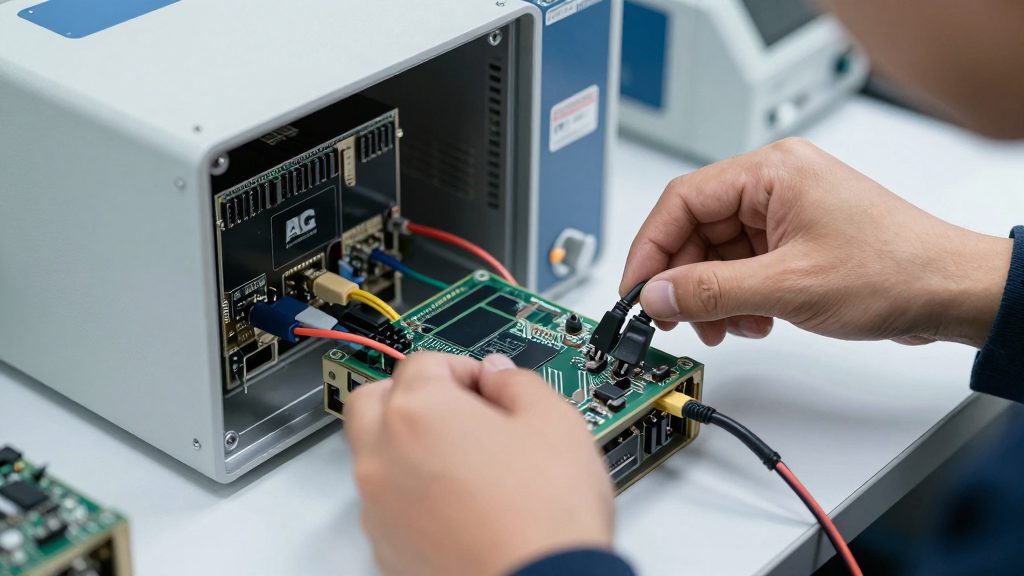
The server environment where the model runs must match its resource demands (memory, GPU memory, CPU cores, etc). Simply having a working model doesn’t guarantee performance. For models that require high-end hardware like GPUs, it's essential to confirm whether the deployment environment can provide sufficient resources. Insufficient resources may lead to server errors or delays, so predicting resource usage based on model size and inference speed is critical.

3. Ensuring Consistency in Data Preprocessing
Inconsistencies between the data preprocessing used during training and that applied at deployment can lead to significant prediction errors. Especially for text-based models, inconsistencies in handling whitespace, special characters, and language normalization can dramatically increase error rates. Implementing the same preprocessing pipeline in deployment environments is essential, and codifying these steps with version control ensures stability.

4. Error Handling and Rollback Mechanisms
When models produce unexpected outputs, error handling logic is essential to prevent system-wide failures. For example, the system should automatically provide alternative responses or notify users when a model returns meaningless outputs. Additionally, systems must allow quick rollback to previous versions in case of issues after deployment. This is not a pre-deployment check but rather a fundamental part of operational readiness.
5. Compliance with Data Security and Privacy Regulations
When AI models process user input, they must not store or log data containing personal information. Especially for text-based models, user sentences may influence internal model states, potentially exposing personal data in logs. Therefore, data should only be temporarily retained during inference and immediately deleted afterward. Policies must comply with privacy laws such as the Personal Information Protection Act.
6. Performance Monitoring and Logging Strategy
Continuous monitoring after deployment is essential. Real-time tools should be used to detect changes in response speed, error rates, and input patterns. Given that data distribution can change over time, automated monitoring systems that detect deviations and alert users are highly beneficial. Logging is essential for troubleshooting but can pose security risks if too much data is stored; thus, only necessary logs should be retained and encrypted.
Deploying AI models is more than just uploading code—it’s a complex process that requires ensuring technical stability and user trust. The above six checkpoints are practical criteria to review before deployment. Especially important are non-technical elements like security and infrastructure compatibility, which often play a more critical role than technical performance. Adjusting each item according to real-world conditions is essential, and thorough preparation before deployment becomes increasingly valuable as technology advances.





Comments 0