AI low carbon farming issues: Why manage soil chemistry
"The transition to low-carbon farming requires a deep understanding of how soil carbon responds to land-use changes and management techniques."
The technical issues in AI low carbon farming involve managing soil organic carbon (SOC) levels, which can drop significantly during land conversion, and implementing precise sequestration methods like biochar application or no-till practices.
This guide explores the challenges of maintaining soil health, the potential for yield increases through carbon enrichment, and the limitations of current land-use transitions.
What are the primary challenges in AI low carbon farming?
A farmer stands in a field of dry, cracked earth, looking at a sensor that monitors soil health. Managing the complexities of soil chemistry while trying to meet carbon reduction targets represents a major hurdle for any automated system.
According to the Food and Agriculture Organization, this is a list of countries by rice production in 2022 based on the Food and Agriculture Organization Corporate Statistical Database.
The primary challenge involves the inherent instability of soil organic carbon during land-use transitions. When soil is converted from natural or semi-natural land, such as forests, woodlands, grasslands, steppes, and savannas, the SOC content in the soil reduces by about 30–40%.
This loss of carbon makes it difficult to establish a baseline for carbon credit programs or to predict how much carbon can be reliably sequestered.
Addressing these technical gaps requires understanding how much carbon can be held in the soil. Soils can contain up to 5% carbon by weight, including decomposing plant and animal matter and biochar.
Because much of this carbon is stabilized by mineral–organic associations, managing the delicate balance between organic matter and mineral interactions is a key technical hurdle.
How can carbon sequestration improve crop yields? AI low carbon farming issues
At dawn, a researcher kneels in the damp field to touch the dark, fertile soil enriched by recent carbon applications.
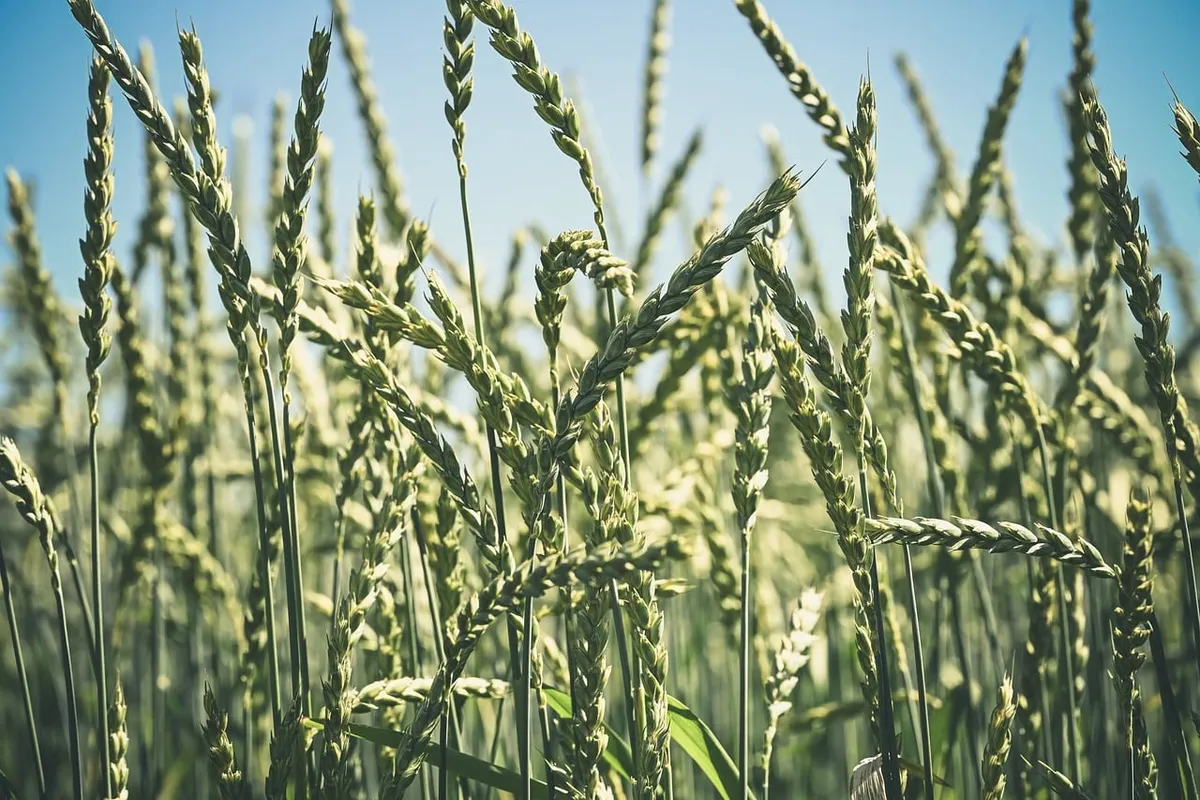
A researcher carefully measures the growth of wheat in a plot of soil enriched with organic matter. Integrating AI-driven precision tools helps determine exactly how much carbon addition is required to see tangible productivity gains.
On degraded croplands, an increase of one ton of soil carbon pool may increase crop yield by 20 to 40 kilograms per hectare of wheat. For maize, an increase of 10 to 20 kg/ha is possible, while cowpeas may see an increase of 0.5 to 1 kg/ha.
These specific metrics are vital for calculating the economic viability of low-carbon agricultural transitions.
The transition to green farming often relies on these productivity boosts to offset the costs of new technology.
If a single compost application can significantly and durably increase grassland carbon storage, as seen in some studies, then automated application systems could revolutionize how we manage soil fertility.
What are the specific methods for increasing soil carbon?

A technician mixes biochar into a dark, rich soil mixture to prepare for a new planting season. Using advanced technology to apply soil amendments correctly is essential for successful carbon farming.
Effective carbon farming involves several distinct approaches to sequestration:
- Implement no-till or conservation tillage to prevent the loss of organic matter. By 2014, more than 75% of Canadian Prairies' cropland had adopted "conservation tillage" and more than 50% had adopted no-till. 2. Utilize biochar to enhance carbon stability. Mixing anaerobically burned biochar into soil sequesters approximately 50% of the carbon in the biomass. 3. Replace slash-and-burn practices with slash-and-char methods. Globally, up to 12% of the anthropogenic carbon emissions from land use change (0.21 gigatonnes) can be offset annually in soil if this transition occurs.
I observed how a single application of compost could lead to massive changes in grassland productivity, where one site saw a forage increase of 78%. This shows how sensitive the soil is to specific management actions.
What are the risks of continuous cropping?
A worker inspects a field where the soil appears much thinner and less fertile than the surrounding natural landscape. Understanding the degradation caused by intensive farming is a prerequisite for any smart farming solution.
Continuous cropping can lead to significant depletion of soil health over time. For example, soil carbon levels from 1990 to 2006 declined by 30% on average under continuous cropping. This decline represents a massive loss of potential carbon storage and a threat to long-term food security.
The technical limits in green farming are often defined by these historical trends. To counteract this, farmers must find ways to stabilize carbon through mineral-organic associations, which currently account for about 90% of the stabilized carbon in the soil.
How does biofuel production relate to carbon farming?
An engineer monitors a pyrolysis unit that converts biomass into energy and biochar. Integrating energy production with agricultural management is a complex but necessary part of the carbon cycle.
Modern biomass-to-biofuel processes can serve as a source of soil amendments. Biofuel production using modern biomass can produce a bio-char by-product through pyrolysis, sequestering 30.6 kg for each gigajoule of energy produced.

This creates a circular economy where energy production directly supports soil carbon levels.
| Method | Carbon Sequestration Potential |
|---|---|
| Biochar in soil | 50% of biomass carbon |
| Biofuel byproduct | 30.6 kg per gigajoule |
This comparison highlights how different technological paths offer varying levels of sequestration efficiency.
- What are the primary challenges in AI low carbon farming?
- How can carbon sequestration improve crop yields?
- What are the specific methods for increasing soil carbon?
The subject here is AI low carbon farming issues.
The same subject is also called AI farm tech problems.
The same subject is also called Low carbon ag challenges.
The same subject is also called Smart farming hurdles.
AI agriculture carbon reduction
Related
- AI marketing consumer behavior: Guide to influencer risks
- What are the measurable impacts on practitioner performance?
How do AI systems address the transition challenges? AI systems attempt to mitigate the inherent instability of soil carbon during the transition by providing granular data on soil health. These systems monitor soil chemistry to help farmers make precise adjustments to management techniques. The goal is to stabilize the delicate balance between organic matter and mineral interactions, which is a key technical hurdle in the transition.
AI tools can help determine the exact carbon addition needed to achieve desired productivity gains. This precision is crucial because the potential for yield increases varies significantly depending on the crop being grown.
For instance, the required carbon input differs between wheat, maize, and cowpeas.
Maintaining soil health requires continuous monitoring of these variables during the transition period. The technology aims to support practices like no-till farming, which helps prevent the loss of organic matter, thereby supporting the overall carbon transition goals.








Comments 0